(2026–2030) EuroNMC — European Network for NeuroMorphic Computing
COST Action CA25118 - Giulia D'Angelo: Vice-Chair
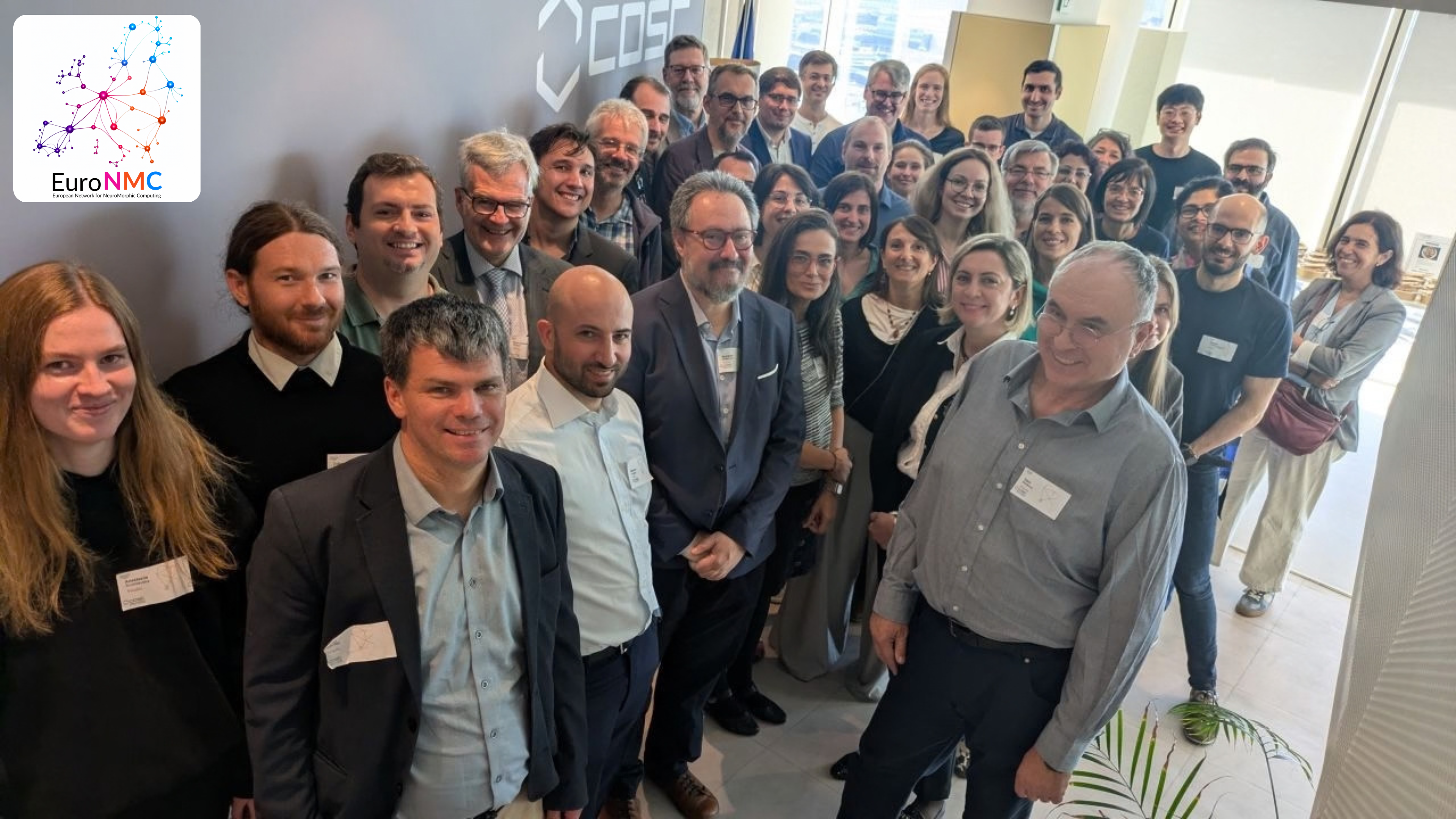
Overview: EuroNMC is a pan-European research network dedicated to neuromorphic computing, an alternative computing paradigm inspired by the brain's parallel, sparse, and event-driven information processing. Approved by COST in May 2026 and coordinated by Forschungszentrum Jülich, the network brings together 139 researchers from 80 institutions across 24 countries, spanning materials science, device engineering, high-performance computing, brain-inspired AI, and neuroscience. Its goal is to bridge Europe's fragmented neuromorphic landscape by connecting bio-inspired models with hardware, software, and industrial applications.
Work Groups:
- WG1 – Foundations & Theoretical Models: Establish the conceptual and theoretical groundwork linking biological computation principles to neuromorphic systems.
- WG2 – Neuromorphic Devices & Circuits: Advance novel memory devices, chip design, and hardware architectures for energy-efficient, event-driven computing.
- WG3 – Neuromorphic Architectures & Brain-Inspired Algorithms: Develop architectures and algorithms that translate biological computation into scalable, hardware-ready systems.
- WG4 – Applications & Use Cases: Identify and demonstrate real-world applications across AI, robotics, and energy-efficient edge computing.
- WG5 – Training, Education & Resource Pooling: Coordinate training schools, gatherings, and shared resources to build cross-disciplinary expertise.
- WG6 – Dissemination & Outreach: Communicate the network's progress and results to the scientific community, industry, and the wider public.
Scope: Neuromorphic computing and engineering, novel computing architectures, novel electronic devices, brain-inspired computing and architectures — covering the full value chain from biologically inspired models to hardware, software, and industrial use.
Impact: EuroNMC strengthens coordination across a previously fragmented European research landscape, fostering interdisciplinary exchange and training to accelerate the development of low-power, brain-inspired computing technologies. By connecting academia, industry, and policy stakeholders across 24 countries, the network positions Europe as a leading contributor to sustainable, energy-efficient AI and computing.